Exhaust Systems and Their Intricate Secrets
Table of Contents
Every time you press down on the gas pedal and give some power to your vehicle, there are several small explosions occurring in the engine that will be transmitted through the exhaust systems to the outside world to allow for a quiet conversation with the outside world. Fuel ignites. Pistons move. Power is made. After all the heat and gas escapes, they will have to go somewhere else; it won’t end up in either your lungs or cabin.
When things get too noisy as they exit through the tailpipe of a vehicle many people do not think about where all the gases and heat go until they are embarrassed by how bad it sounds (i.e., when the car sounds like a shopping cart full of silverware). That is when the mysterious plumbing under the floor becomes very real.
But here is the thing. That long stretch of metal tubing is not just there to quiet things down. It is doing serious work, quietly and consistently, every single drive.
The Road Trip You Never See
Let us follow the journey of exhaust gas for a moment. Imagine it as a hyperactive tourist who has just been kicked out of a combustion chamber. It is hot, loud, and in a hurry. First stop is the exhaust manifold, which gathers gases from each cylinder and merges them into one stream. It is like traffic control at a busy roundabout, directing everything into a single lane.
From there, the gas heads toward the catalytic converter. This is where the magic happens. Inside that metal casing sits a honeycomb structure coated with precious metals. When hot gases pass through, chemical reactions break down harmful compounds. Carbon monoxide gets converted. Unburned hydrocarbons are cleaned up. Nitrogen oxides are reduced. It is less drama, more science fair project.

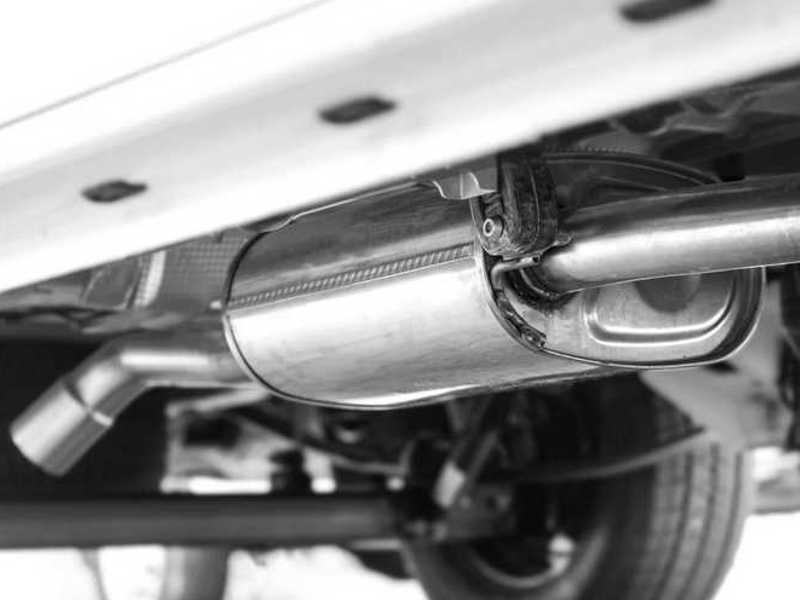
After that, the gases move through resonators and mufflers. This is where the noise gets tamed. Without these components, your car would sound like a small aircraft attempting to take off in your driveway.